
Technique · 3 min read
What Sumi-e can teach a watercolour painter
One brush, one mark and the discipline of leaving enough unpainted.
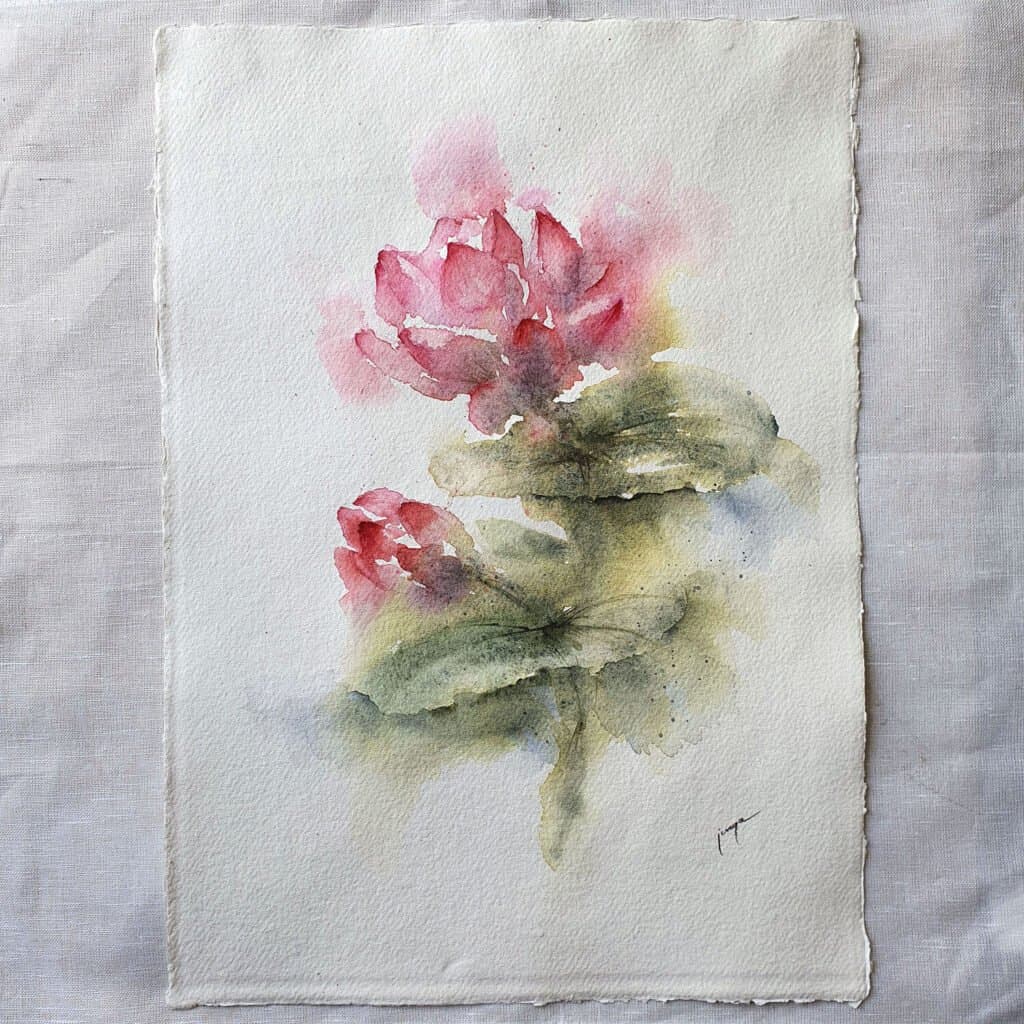
Sumi-e is Japanese ink painting on absorbent paper. A stroke cannot be scrubbed away and repaired in the usual sense, so preparation, breath and attention become part of the mark.
Watercolour painters can borrow that discipline without imitating the appearance of a Sumi-e painting.
Load the brush with intention
A brush can carry more than one value at once. Try clear water toward the tip and stronger pigment near the belly, then make one slow stroke. Pressure, speed and rotation create variation without repeated touching.
Practise the mark before the subject
- Make five vertical strokes using different pressure.
- Make five leaf strokes without outlining.
- Leave one imperfect mark untouched.
- Notice which movement produced the most alive result.
Studio noteThe exercise is not a search for the prettiest stroke. It is a way to connect what the hand does with what appears on the paper.
Treat empty space as form
In both Sumi-e and transparent watercolour, unpainted paper is active. It can separate two forms, carry light or create stillness. Before adding a final mark, ask whether the space is already doing the work.
Jurga teaches private Sumi-e workshops for groups as well as atmospheric watercolour classes.
Explore Sumi-e workshops