
Technique · 3 min read
Sumi-e brush practice for beginners: five simple explorations
Explore pressure, water, tone and space with five beginner ink-brush exercises, plus guidance on Jurga’s private Sumi-e workshops in London.
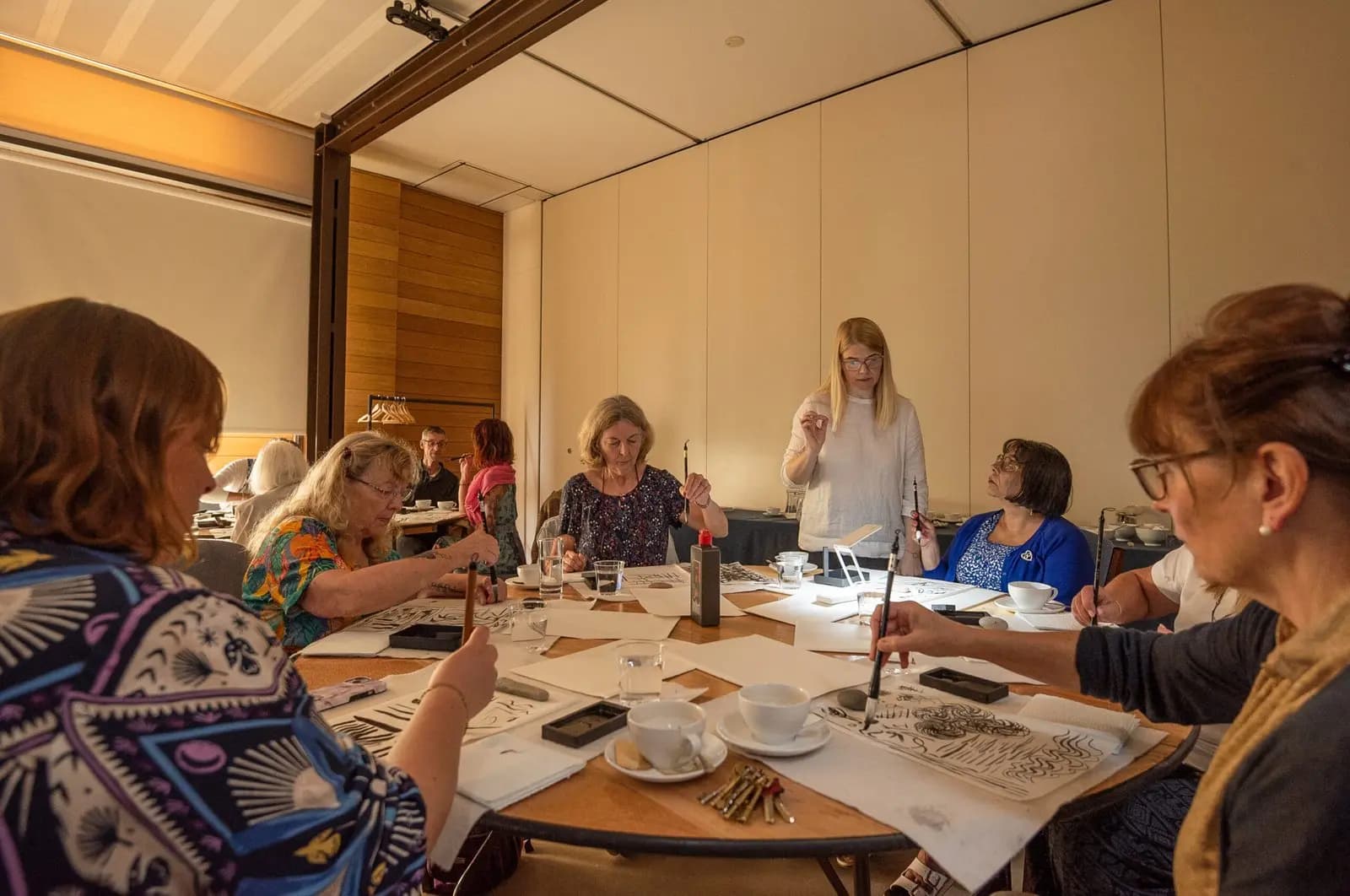
Sumi-e is a Japanese ink-painting practice in which brush movement, tone and space work together. A small number of marks can carry a great deal of information. For a beginner, a useful starting point is to watch what changes when you alter one part of a brushstroke.
The five explorations below are introductory practice ideas, not a canonical set of traditional Sumi-e forms. They help you become familiar with your materials before attempting a more complex subject or following a teacher’s demonstration.
Prepare a surface where you can experiment
Use ink intended for brush painting, a suitable soft brush, clean water, a palette and practice paper. Different papers absorb ink very differently. Begin with small tests on the paper you have, then compare them with the paper recommended by your tutor. Protect the table and keep a separate cloth for wiping excess water.
Prepare a pale, middle and dark tone in separate areas of the palette. Test each on scrap paper and let it dry. The same mixture can appear different depending on how much water is held in the brush and how quickly the paper absorbs it.
1. A pressure ladder
Load the brush, then make a short stroke using the tip with light pressure. Beside it, make another stroke while gently increasing pressure so that more of the brush touches the paper. Repeat a few times, returning towards the tip at the end.
Look for a controlled change of width rather than identical marks. If the stroke begins with a puddle, reduce the excess liquid before trying again. If the tip splits, check the brush shape and whether you are pushing harder than needed. Leave the first attempts visible so you can compare them.
2. A leaf-shaped mark
Begin lightly, increase contact to widen the middle of the stroke, then lift gradually to narrow the end. Try the same movement in another direction. The result need not resemble a finished botanical leaf: the purpose is to connect the beginning, middle and end of one movement.
Make a small group with different directions and a little space between the marks. Notice whether all the leaves feel equally heavy. Try changing one mark instead of adding more to fill every gap.
3. A curving stem
Practise a gently curving line at a comfortable pace. Try moving the hand and arm together rather than forcing the entire curve through a tight wrist movement. Compare a hesitant line with one made in a single continuous movement.
Vary the pressure slightly along the curve. Choose the version whose changes feel intentional, then add just two or three leaf-shaped marks. Look at the space between them as carefully as the marks themselves.
4. A dry-brush texture
After loading the brush, remove some excess moisture on a spare surface and draw it across the practice paper. Compare the broken texture with a wetter stroke. Absorbent and textured papers will change the result, so make a few modest adjustments rather than pressing harder immediately.
Use the texture in one small area, such as a suggested branch. If every mark is broken and equally dark, there may be little contrast left. Place a smoother, paler mark nearby and observe the difference.
5. A branch in three tones
Use the middle tone to suggest a simple branch. Add a few pale marks and one or two darker accents. Pause before adding more. Ask where the eye goes first and whether the empty areas still have shape.
If the tones merge into one wet patch, repeat the study with less liquid or more space between strokes. If they feel unrelated, simplify the arrangement. Keep the composition small enough that you can make a second version rather than repeatedly correcting the first.
Bring your questions to a workshop
Keep one practice sheet and note the question it raises: how to control a wider stroke, how much water to hold, or when to leave a space untouched. A tutor can respond more precisely when they can see the marks that produced the question.
Jurga offers private Sumi-e workshops in London for groups of five or more, with the venue arranged for the group. Materials are included and beginners are welcome. You can also register interest in a public workshop; a date depends on enough participants. This is separate from the regular Thursday watercolour class, so enquire about the Sumi-e format and dates directly.
Find the current group format, materials information and enquiry options for Japanese ink painting with Jurga.
Enquire about a Sumi-e workshop