
Technique · 3 min read
Soft and lost edges: the quiet structure of atmospheric watercolour
How three kinds of edge can create focus, movement and enough space for the viewer.
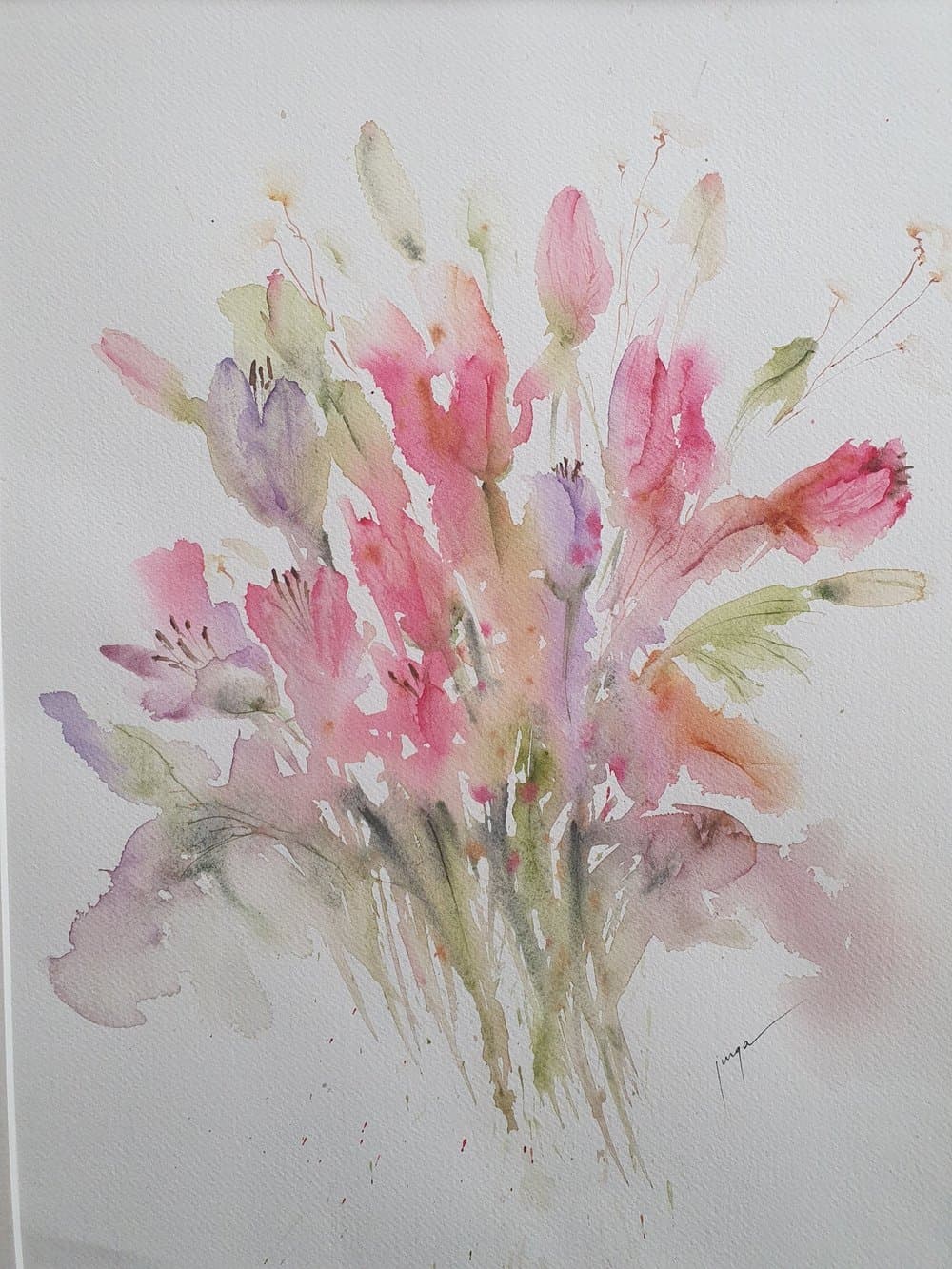
An edge is not only the boundary of an object. It tells the eye where to pause, where to move and where to complete the image for itself.
Atmospheric watercolour often feels generous because it varies those instructions. One edge is clear, another softens, and another disappears into the surrounding wash.
Give each edge a different job
A hard edge attracts attention and helps a focal area feel present. A soft edge suggests movement, light or a turn in form. A lost edge lets two shapes meet without an outline. If every edge is equally sharp, the painting can feel cut out; if every edge is soft, it may lack direction.
Try one shape three ways
- Paint a simple petal or fruit shape on dry paper and leave one side crisp.
- While the wash is damp, touch a clean moist brush to a second side and draw the colour outward.
- Join the third side to a neighbouring wash so the boundary disappears.
- Let the paper dry before deciding whether anything else is needed.
Studio noteUse less water in the softening brush than in the original wash. A dripping brush creates a bloom; a merely damp one moves the edge gently.
Place clarity with intention
Keep the clearest edge near the part of the subject that matters most. Allow softer and lost edges to lead away from it. The result is not unfinished; it is selective. The viewer receives enough information and enough freedom.
Jurga’s Thursday classes use simple subjects to explore water, edges and confident stopping. Materials are included.
Practise with Jurga