
Travel · 3 min read
How to paint Andalusia’s white villages in watercolour
Paint white buildings with light, shadow and a limited palette. Try a four-value study before adding line-and-wash details to an Andalusian village scene.
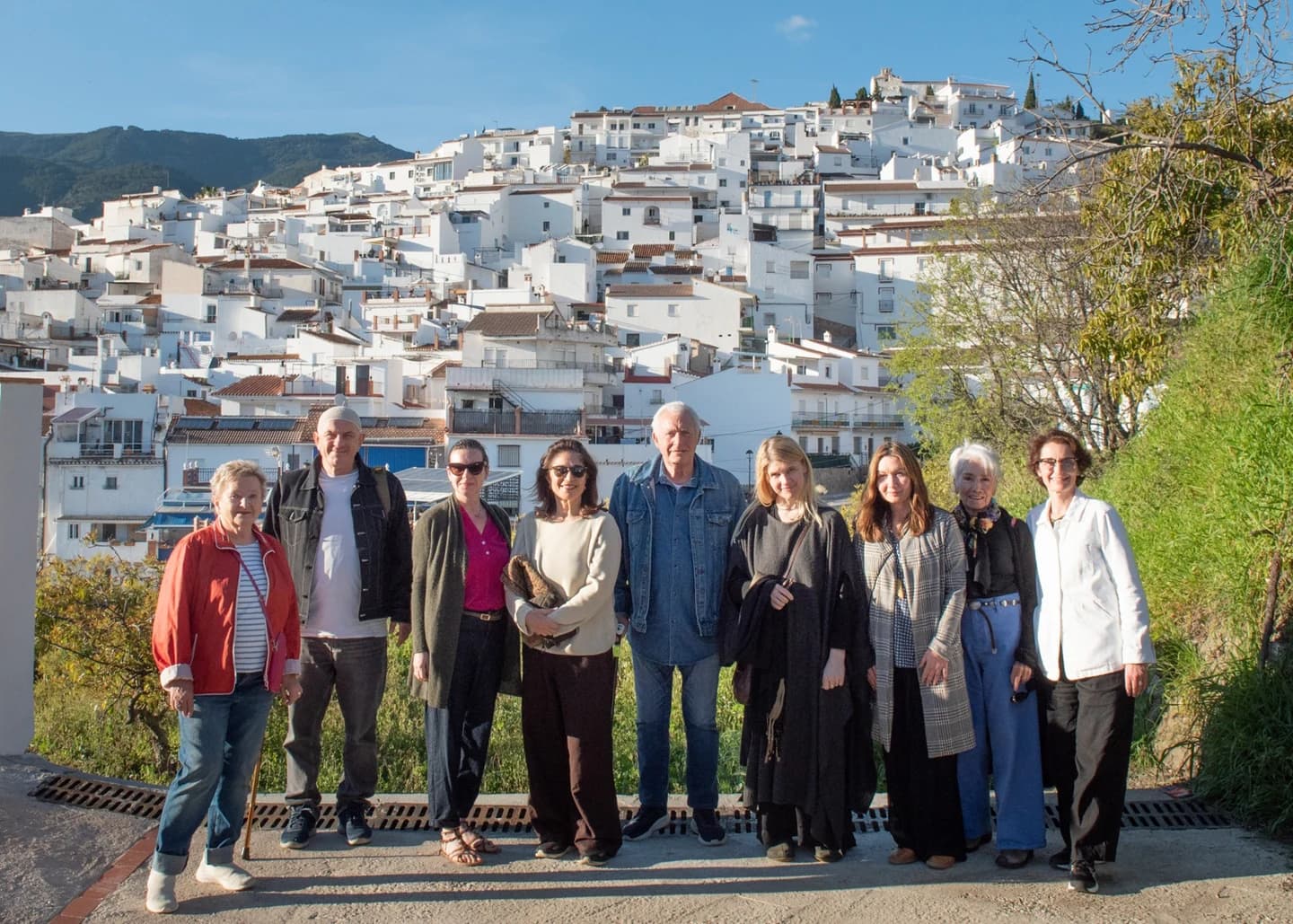
A white village can look deceptively simple to paint. The walls may share a pale colour, but their shapes become visible through shade, reflected light and the dark openings between them. Painting every wall white and outlining each one heavily can flatten that variety.
Start with a small section of a street: one doorway, an adjoining wall and a strip of sky. You will have enough architecture to study without trying to describe the whole village. Work from a place where you can sit safely without blocking a pavement or doorway, or use your own reference photograph.
Decide which white belongs to the paper
Look for the lightest area in the scene. It might be a sunlit wall, a narrow edge or the top of a step. Choose a few places to leave unpainted. If you reserve white everywhere, the scene can become fragmented; if you cover it all immediately, you lose the simplest source of brightness.
Make a tiny pencil sketch and mark the shapes you want to keep white. Think of them as connected shapes rather than a collection of individual highlights. The decision can change as you paint, but making it early helps you avoid colouring every surface by habit.
Try one wall in four values
Draw four small versions of the same wall and doorway. Keep the outline basic. Mix a single neutral wash using colours you already have, then test it on spare paper.
- Leave the lightest part as untouched paper in all four versions.
- In the first, add only a very pale shadow.
- In the second, make the doorway clearly darker than the wall.
- In the third, connect a cast shadow to the dark doorway.
- In the fourth, reduce the number of shapes and keep only the strongest light–dark relationships.
Use temperature without losing the value structure
A shaded white wall does not have to be a flat grey. Look for subtle warm or cool shifts in the scene rather than applying one formula to every building. A pale warm wash beside a cooler shadow can suggest changing light, provided the shadow is still darker than the sunlit surface.
Use a limited palette for the first study. Mix a warm and cool version of the same pale tone and place them side by side on scrap paper. When they dry, check that the colour variation has not become stronger than the architecture. Small shifts often do enough.
Choose a few structural lines
When using line and wash, let some edges be made by a meeting of light and dark rather than by a drawn border. Save pen marks for a doorway, the direction of a roof or the place where two walls turn. A broken line can suggest an edge without enclosing the whole building.
If you draw after painting, wait until the paper is fully dry. If you draw before, test the pen’s water resistance first. Keep the darkest accents near the part of the street you want the viewer to notice.
Let the light change without chasing it
Outdoors, shadows can move while you work. Record the main shadow shape in a thumbnail at the beginning, then use that as your reference for the study. You can still observe colour and detail as the light changes, but redrawing every shadow midway may weaken the structure.
If conditions become uncomfortable, make a few colour notes and finish later. A sketchbook study does not need to contain everything. A clear observation of one wall can be more useful than a hurried panorama.
Painting architecture with Jurga in Andalusia
Colours of Andalusia runs from 3–8 May 2027, with five nights at La Posada in Canillas de Albaida and four days of architectural line-and-wash watercolour tuition. The programme includes painting in Canillas de Albaida, Cómpeta, Frigiliana and Árchez, alongside cultural visits and tastings.
The creative holiday is £2,200 for a painter in a private en-suite room; current sharing options are listed on the Spain page. Materials, meals and scheduled transfers are included. Flights and travel insurance are not included. Check the full programme and booking terms before arranging travel.
The photograph accompanying this article is from the 2026 creative holiday. Use the current Spain page for the 2027 accommodation and programme details.
See the dates, painting programme, inclusions and room options for Colours of Andalusia.
Explore the Spain creative holiday