
Technique · 4 min read
How to paint loose watercolour without overworking it
A practical way to keep washes alive, edges varied and decisions clear.
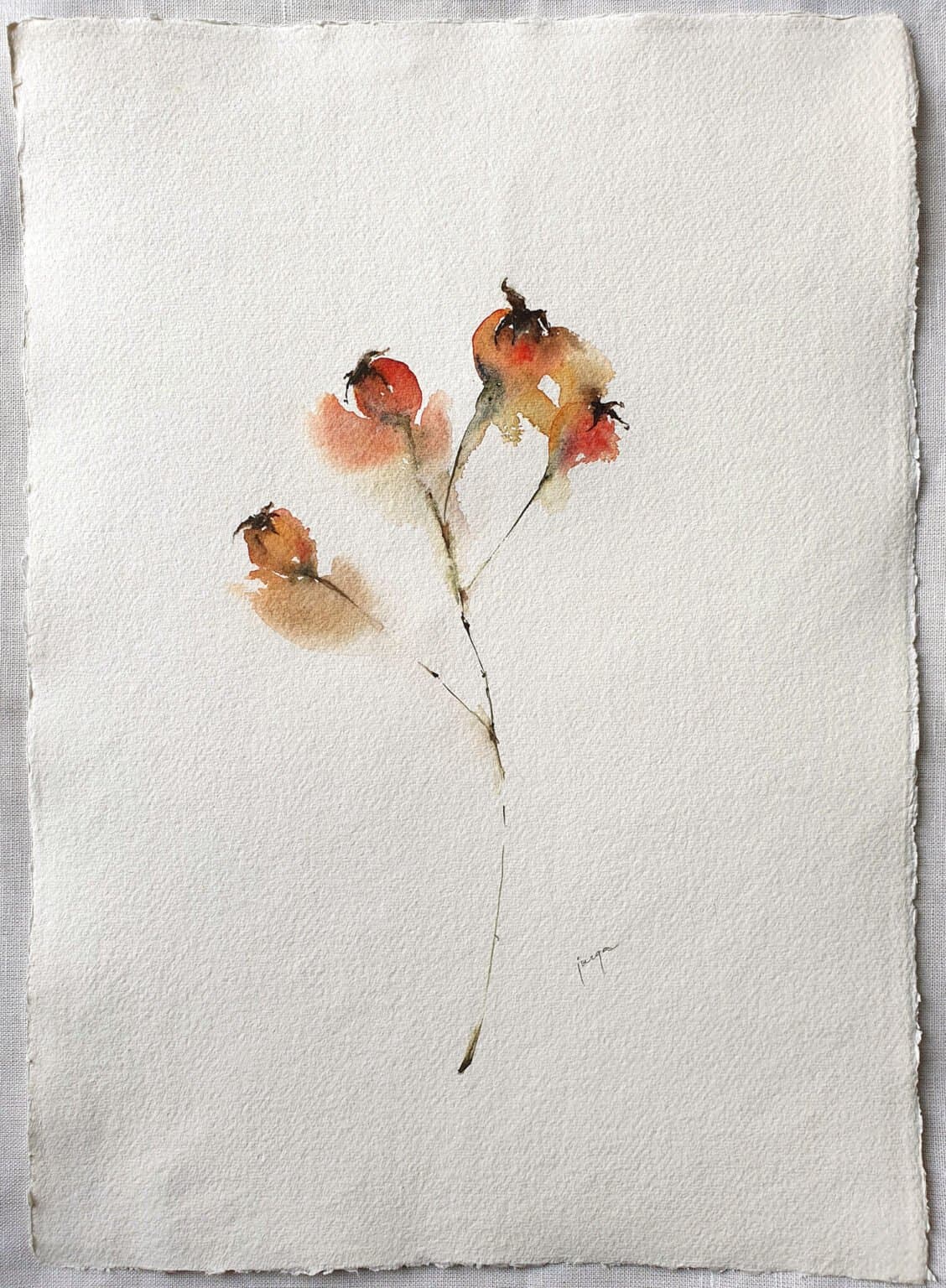
Loose watercolour is not careless watercolour. It depends on deciding which information matters, placing it with confidence and allowing water to do work that the brush cannot improve.
Overworking usually begins when a painter responds to uncertainty by touching every area again. The answer is not faster painting. It is a clearer sequence and more deliberate pauses.
Choose one subject and one intention
Use a simple subject: one pear, a leafy stem or a single cup. Before mixing colour, finish this sentence: “The painting is about…” It might be the tilt of the stem, the deep violet shadow or the white shape between two leaves.
That sentence becomes an editing tool. Details that do not strengthen the intention can remain unpainted.
The ten-minute exercise
- Minute 0–2: make a very light drawing using no more than six lines.
- Minute 2–4: mix the largest colour pool before touching the paper. Make more than seems necessary.
- Minute 4–6: place the broadest connected shape. Leave at least three areas of untouched paper.
- Minute 6–8: add one darker mixture only where it clarifies overlap, weight or direction.
- Minute 8–10: step back. Add no more than five small marks, then stop.
Studio noteSet the brush down during each pause. Looking with an empty hand makes it easier to see the painting as a whole.
Let edges do the describing
A hard edge says “look here”. A soft edge lets one form move into another. A lost edge asks the viewer to complete the image. If every contour is equally sharp, the painting becomes outlined; if every edge is soft, it loses structure.
Make one focal edge crisp. Soften a nearby edge with a clean, damp brush. Let another disappear into the wash. Three kinds of edge create more life than another layer of detail.
Know when a wash is untouchable
A glossy wash is still moving and can accept another wet colour. A damp, satin surface is the dangerous middle stage: a new stroke often pushes pigment outward and creates a bloom. A fully dry surface can accept a deliberate glaze.
When the shine has gone but the paper is still cool and damp, wait. Many muddy passages are simply good washes interrupted at the wrong moment.
Use a stopping test
If the next mark has no named job, leave it. Put the work upright and look again the following day. Restraint becomes easier when stopping is treated as a decision, not an accident.
- Can the subject be understood at arm’s length?
- Is the focal area clear without explaining it?
- Does the light still belong to the paper?
- Would the next mark solve a specific problem—or only relieve nervousness?
Practise washes, edges and confident stopping with Jurga in a small London group. Beginners and returning painters are welcome.
Book a Thursday class