
Materials · 4 min read
A simple beginner watercolour kit: paints, paper and brushes
A compact, dependable set-up for learning at home—without buying a drawer full of materials.
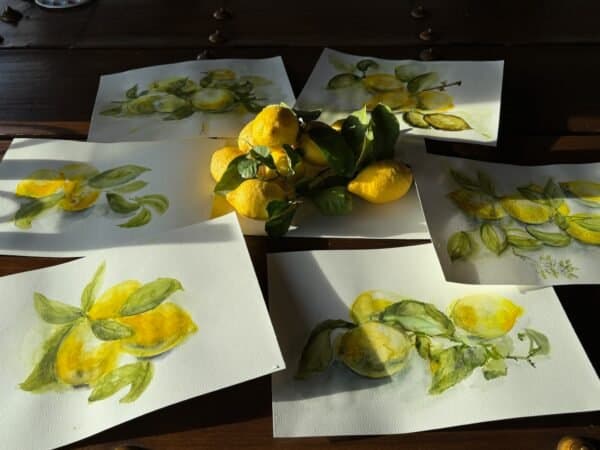
Watercolour needs less equipment than the art-shop shelves suggest. A small palette, one responsive brush and paper that can tolerate water are enough to learn washes, edges, colour mixing and negative space.
Jurga’s weekly London class includes materials, so there is no need to shop before attending. This guide is for anyone who wants a straightforward kit for practising at home.
1. Begin with a compact pan set
A twelve-colour student-quality set is a useful first palette. It gives enough range for colour-mixing exercises while keeping decisions manageable. Half pans travel well, create less mess than loose tubes and make it easy to return to painting for ten minutes at a time.
The Winsor & Newton Cotman Water Brush Pocket Set is one practical option. It contains twelve half pans and a refillable water brush. The colours may vary, so check the current list before buying. A conventional round brush will still give more control for studio practice.
2. Spend attention on paper
Paper changes the painting more than adding another colour. Very thin paper buckles quickly and encourages scrubbing because the wash sits unevenly. For practice, look for 300 gsm watercolour paper with a NOT or cold-pressed surface. It has enough texture to hold a wash without making every mark feel rough.
Bockingford is an accessible, mould-made paper with a forgiving surface and good colour-lifting ability. Buy a pad rather than precious individual sheets at first: using paper freely is part of learning.
Studio noteIf the budget is fixed, choose sound paper and fewer colours. A limited palette on reliable paper teaches more than many pigments on a surface that fights the water.
3. Use one main brush
Start with a round synthetic watercolour brush around size 8. It should form a point when wet and hold enough water for a clean wash. Add a smaller size 2 or 4 only when you genuinely need finer marks. Brush sizes vary by maker, so look at the shape and capacity rather than treating the number as an exact standard.
A large wash brush, fan brush and specialist detail brushes can wait. Learning how one round brush changes from its belly to its point builds more useful control.
4. The useful extras are ordinary
Skip masking fluid, metallic colour, dozens of brushes and large tube collections until a particular painting asks for them. A kit should make starting easier, not make choosing harder.
- Two water jars: one for the first rinse, one kept cleaner for mixing.
- A white ceramic plate or the clean mixing area inside the palette.
- An HB pencil and a soft eraser for the lightest possible guide marks.
- A cotton cloth or unpatterned kitchen paper for controlling moisture.
- Low-tack masking tape and a board if the paper needs support.
A five-minute check before buying
Product links are provided for convenience and are not affiliate links. Availability and specifications can change; the page was checked on 19 July 2026.
- Will the paper accept repeated wet washes?
- Does the brush return to a point when wet?
- Can the palette mix a warm, a cool and a neutral colour?
- Can the whole kit remain visible and ready to use?
Prefer to try the materials before choosing your own? Everything is included in Jurga’s Thursday class at Cass Art Kensington.
See watercolour classes